The phone rings while she is making dinner.
It is her daughter's number. It is her daughter's voice. Crying, the way she cried at twelve when she fell off her bike, except now she is thirty-seven and the words are different. Mom. Please do not freak out. Some men have me. They want money wired to Mexico, and they said if you call the police I disappear.
The mother does not hang up for five and a half hours. She drives to the bank. She wires the money in pieces, the way they tell her to. Five thousand four hundred dollars, gone across a border, while her daughter's voice stays in her ear the whole time, begging.
Her daughter was at work. Safe. Had been the whole time.
That scene is invented. The case is not. Deborah Del Mastro of California lived it, and in October she told it to the United States Senate, at a hearing on AI-enabled fraud. The voice on the phone was built out of her daughter's real voice, because three seconds of audio is now enough to clone one. Three seconds. A voicemail greeting. A birthday video. A clip your kid posted and forgot.
The file is getting thick
The FBI counted 22,364 complaints about AI-related fraud in 2025, with more than 893 million dollars in losses. That was the first year the Bureau even tracked "AI-related" as its own category of crime. The category is one year old and it is already closing in on a billion dollars.
Researchers count roughly eight million deepfakes circulating online now. Two years ago the count was half a million. Sixteen times as many, in the time it takes a kid to finish high school.
And it is not only the family emergency calls. In Italy, a finance team at Fideuram, part of the Intesa Sanpaolo banking group, got a WhatsApp message that appeared to come from the bank's CEO about an urgent, confidential overseas deal. Then came a phone call in the cloned voice of a partner at a major law firm. Then the paperwork, forged and tidy. The team sent eleven transfers totaling about 95 million euros, most of it toward China and Hong Kong.
Investigators clawed back a little over half. Tens of millions never came back. The chairman resigned. The story only became public in September, seven months after it happened, which tells you how many institutions are sitting on stories like this one, hoping nobody asks.
Ask the skeptics and they will tell you this is just the old con with new paint. Phishing with better pronunciation. Fraud is fraud.
Then ask them why it worked on the chairman's own bank.
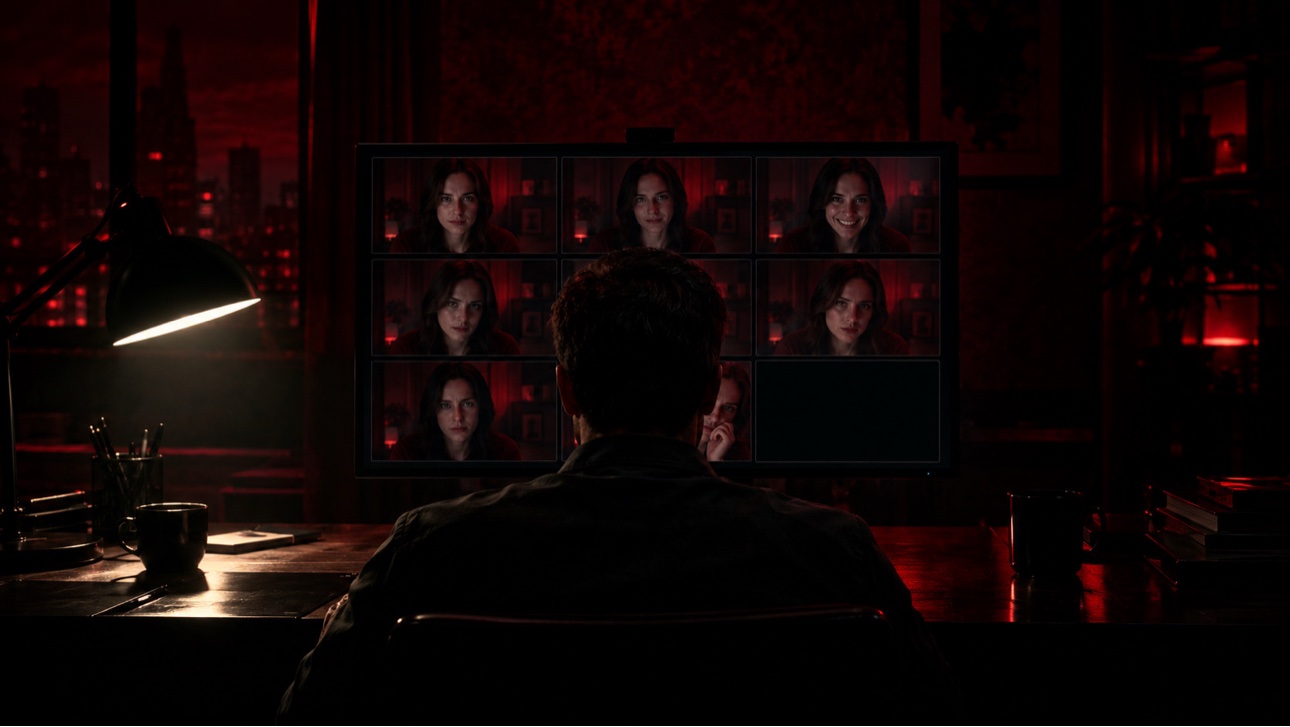
Two years before Italy, it worked in Hong Kong, where an employee at the engineering firm Arup joined a video call with his bosses and colleagues. Every other face on that call was generated. Every voice. He was the only real person in the room, and he wired out 25 million dollars. The lone human in the meeting was the mark. Read that twice.
The assessment
Here is where the case stops behaving.
This month, lawyers and executives from the AI companies themselves sat in front of a panel of federal judges in Boston and said the quiet part out loud. OpenAI's policy counsel said she does not believe a scientific method will ever reliably detect AI-generated images. Meta's trust and safety lead said people can no longer tell the newest fakes from the real thing, and that making them takes little money and little time.
Microsoft's own researchers published the same conclusion in February. Watermarks can be stripped or reversed. Provenance tags can be forged or removed. No single technology works. The people who build these tools are telling the courts, on the record, that detection is a losing game.
People are not better at it than the tools. In testing, viewers caught barely one in four high-quality fake videos. And when auditors checked the big platforms this October, only a third of the deepfakes experts identified carried any kind of AI label. The other two thirds just sat there in the feed, looking like news.
So the scoreboard reads like this. The fakes multiply by sixteen. The detectors do not work. The builders admit the detectors do not work. And the laws meant to slow it down keep falling in court. Hawaii's election deepfake law was struck down in January. Montana's was blocked in September. Judges keep finding the same problem: the laws as written punish speech, including speech that is obviously a joke, and the First Amendment does not care that the joke was rendered by a machine. The one federal law with teeth, the TAKE IT DOWN Act, covers nonconsensual intimate images. Real harm, real law. It says nothing about a fake CEO emptying a bank, or a fake candidate emptying a voting booth.
That last one is not hypothetical either. This spring, a Senate campaign ad put words in a candidate's mouth for over a minute, his face, his voice, reading his own old posts back like a confession. The "AI Generated" disclosure ran in microscopic type for about three seconds. Researchers at Utah Valley University have already tested the obvious question, and the answer is the one you feared: fake video moves voters exactly as much as real video. No difference. The counterfeit spends the same as the currency.
What the file does not answer
Every fraud in this article worked the same way. Not by breaking a password. Not by hacking a server. By asking a human a simple question and letting the human's own eyes and ears answer it wrong.
Is it really them?
For about a hundred years, a voice on a phone and a face on a screen were proof. Not perfect proof, but proof enough to build banks and families and elections on. That proof is gone. Not going. Gone. The builders say so. The judges have heard so. The FBI is counting the cost of so, one complaint at a time, 22,364 and climbing.
So here is the question this Halloween season, and it is not really about Halloween. The call comes. The face you love is on the screen, saying words you have never heard them say, asking for something they have never asked for. Everything in you says it is them. But it's not. It's a mask…
How would you know?
Nobody has answered that yet. Not the labs, not the courts, not the platforms. Somebody is going to have to. Until then, the phone keeps ringing, and on the other end of it, wearing the voices of the people we trust most, is whatever wants to be believed.
Sleep tight.
Sources
- Deborah Del Mastro testimony, U.S. Senate hearing on AI-enabled fraud, Oct 2026: voice-clone kidnapping hoax
- FBI IC3, 2025: 22,364 AI-related fraud complaints, more than $893M in losses, the first year tracked as its own category
- Deepfake volume estimates: roughly 8 million circulating, up from about 500,000 two years earlier
- Fideuram / Intesa Sanpaolo (public Sep 2026): about €95M in eleven transfers via WhatsApp and a cloned voice; chairman resigned
- Arup, Hong Kong, 2024: $25M wired after a video call where every other participant was generated
- OpenAI and Meta statements to a federal judicial panel, Boston, Oct 2026: no reliable detection method, on the record
- Microsoft research, Feb 2026: watermarks can be stripped or reversed, provenance tags forged or removed
- Viewer testing and platform audit, Oct 2026: about 1 in 4 high-quality fakes caught; only a third of identified deepfakes carried AI labels
- Hawaii election deepfake law struck down Jan 2026; Montana's blocked Sep 2026; TAKE IT DOWN Act covers nonconsensual intimate images only
- Utah Valley University research: fake video persuades voters as much as real video